A1000 · Career narrative · Data date Oct 2026

From the boiler floorto the integrated plan.

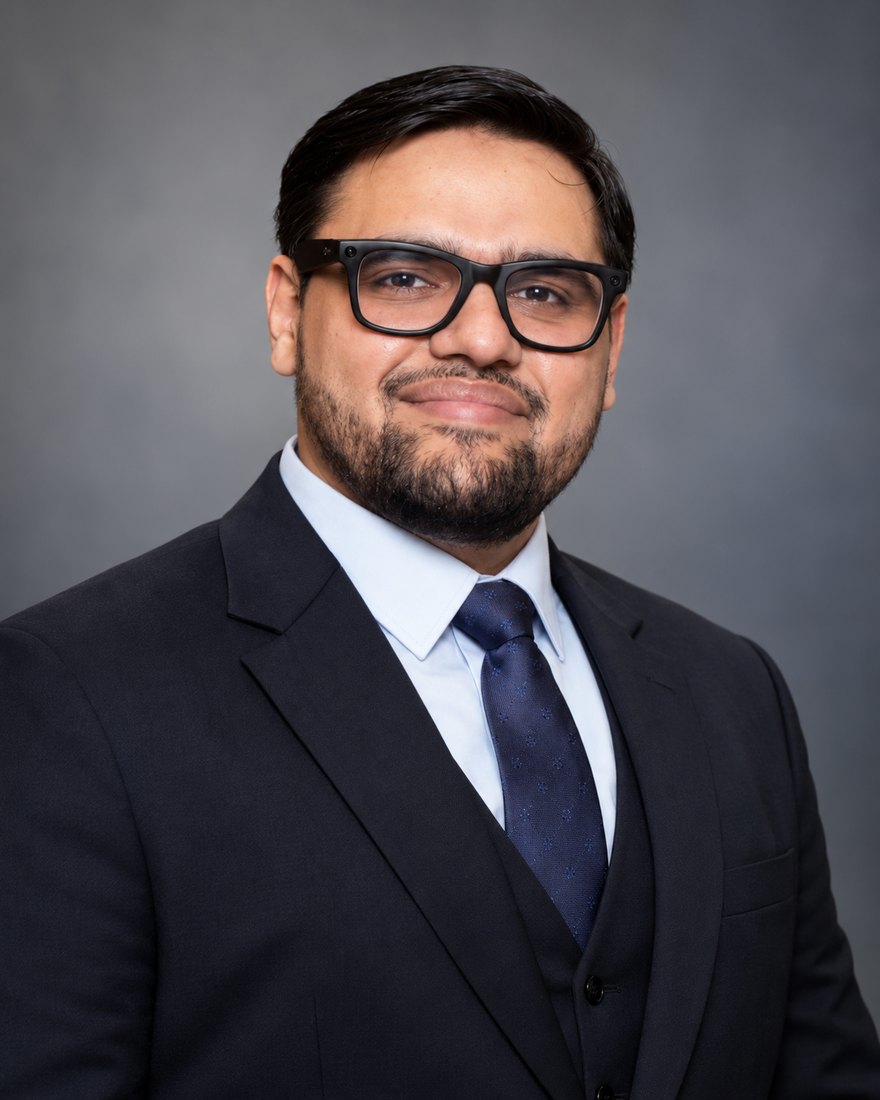
I am Arsalan Parvez. For fourteen years I have been the person who turns a mess of scope, people and dates into a plan that a site can actually execute. This is how that happened, one project at a time.

Connect on LinkedIn ↗
Now
Senior Project Planning Coordinator, ConocoPhillips Canada (Surmont)
Based
Calgary, Alberta
Trade
Project controls · integrated planning · turnarounds
Credential
PMP · B.Tech Mechanical Engineering
Countries
India · Qatar · UAE · Oman · Canada
Portrait of Arsalan Parvez
Arsalan Parvez, PMP · Calgary

The schedule, as I would draw it

Bars to scale · diamonds are the turning points

Dashed line is the data date. Click any bar to jump to that chapter.

A1010 · Aug 2012 – Dec 2013 · Commissioning Planner, BGR Energy Systems

The small boiler that starts the big one

Coal-fired power plant, 2 × 600 MW boilers and turbines · Jhalawar, Rajasthan, India

I finished my mechanical engineering degree in June 2012 and was on site by August. The plant was a coal-fired station with two 600 MW boilers and turbines, and the job was to commission both main boilers, bring the auxiliaries up with them, and synchronize boilers and turbines. A main boiler cannot light on coal from cold. It starts on heavy furnace oil, and heavy furnace oil will not flow until it is heated with superheated steam. That steam has to come from somewhere.

It came from the auxiliary boiler, and the auxiliary boiler was mine. It is a small unit, but it carries every system a big one does: boiler feed pump, light diesel oil pump and tank, water tank, flame, drum level. I commissioned it, ran it, and kept the logbook. Water levels, run durations, flame checks, how long a run had to last to get the furnace oil to temperature before the main boiler could attempt a start. If my runs were planned badly, the commissioning team upstairs waited.

I also ran the motor-driven and turbine-driven boiler feed pumps, the lube oil coolers and the air-cooled water coolers through their first starts. Most of the planning I did that year happened on paper and on the plant floor. That turned out to be the right place to learn it.

Carried forward

A plan is only real if the person at the equipment can act on it. I have never written a schedule since without asking who has to run it.

A1020 · Jan 2014 – Jun 2015 · Field Planner & PTW Coordinator, then Planning Engineer, Descon Engineering

Counting blinds in the fire zones

Dolphin Energy gas plant turnarounds · Qatar

A turnaround is a plant taken apart and put back together against a clock that costs money every hour. I did two of them for Dolphin Energy under Descon's long-term maintenance contract, and they taught me the two halves of planning in the order I needed them.

The first turnaround I worked in the field. The scope was 178 pieces of equipment: dryers, sulphur recovery units, exchangers, pumps, vessels, tanks, columns. My job was to walk every fire zone, every day, and bring back progress in the units that actually mean something. How many blinds were in place. How many pieces of equipment were open and ventilating. How many inspection work lists had been raised, how many cleaned, how many closed. I made sure the flange separators, torquing crews and battery-limit blinds were where the schedule said they would be. I coordinated permits to work, and when a job needed confined-space entry I arranged the gas tester and the continuous gas monitor before anyone went in. For the exchangers I tracked hydrojetting and IRIS inspection, and the count of plugged tubes went to the client for remaining-life calculations before they decided on replacement.

The second turnaround I planned from the office. Three hundred and fifty pieces of equipment, roughly 25,000 activities, resource-loaded in Primavera P6, built in three weeks. I owned the daily progress report, the progress-measurement sheet, the inspection work list and the cost tracking against it, and the subcontractor schedules and payments for scaffolding and painting. During execution the field planners fed me what they had walked that day and I turned it into project progress and a current schedule.

Having done the field job first, I knew exactly what a number in the progress sheet had cost someone to collect, and what it meant when it was wrong.

Carried forward

Progress is measured in physical things: a blind, a closed permit, a plugged tube. Percentages come after, never before.

A1030 · Aug 2015 – Jun 2019 · Lead Planning Engineer, Descon Engineering

Four islands and one barge schedule

ZADCO UZ-750 Offshore Expansion, Upper Zakum · Abu Dhabi, UAE

Upper Zakum was being expanded from 550,000 to 750,000 barrels a day, and the way to do it was to build artificial islands in the Gulf, four of them for this field, and put the facilities on them. Our scope, inside a programme worth about 3.1 billion dollars, was to procure and install the mechanical facilities on those islands: pipe racks, complete control-building modules, large pumps, pipeline tie-ins to live hydrocarbon lines.

I was the lead planning engineer, and the first problem was that an island is small. You cannot land everything at once. Civil works were one subcontractor, electrical another, and mechanical could only start where civil had handed over. So the Level 3 schedule I built in Primavera P6 was really three schedules stitched together, with the handover checklists as the seams. From that schedule I raised the material delivery requests, booked the barges and sequenced what landed when, so that mechanical always had a work front and the island never had material sitting in the way of it. The 500-tonne pipe racks and buildings moved on self-propelled modular transporters, and those moves were planned the same way.

By the end, twelve people reported to me on site: a planning engineer, four planners, two test-pack engineers, three document controllers and two engineers preparing site technical queries and red-line mark-ups. Between us we ran progress measurement, permits, document control, leave planning, personnel mobilization and demobilization, test-pack preparation, the A and B inspection test record checklists, A-punch clearance, mechanical completion and, at the end, material reconciliation of around 6 million dollars of construction material. When the client raised schedule questions, I did the forensic delay analysis and wrote the extension-of-time claim that secured a four-month extension and roughly 25 million dollars of cost recovery.

I wrote the detailed reports for the client and the one-page versions for our own management. Learning to write both for the same week of work was its own education.

Carried forward

The schedule is where the disciplines meet. If I own the seams between civil, electrical and mechanical, the work front looks after itself.

A1040 · Jun 2019 – Feb 2020 · Lead Planning Engineer, Al Nasr Contracting Company

Six planners, twelve projects, one set of budgets

Procurement and construction maintenance projects · UAE

Al Nasr ran many small procurement-and-construction jobs at once: tank-farm dyke wall repairs, oxygen analyzer replacements in furnaces, oil line replacement and repair. None of them was large. All of them were live at the same time. Six planners reported to me, each carrying two projects, and I held the master view: every schedule, every progress update, every recovery schedule when one slipped.

This is where my cost work started. I maintained the budgets for the portfolio, tracked actuals against them, and ran earned value analysis so that a slipping project showed up as a number before it showed up as a surprise. I also wrote down how we did things: the reporting cadence, the progress-measurement rules, the schedule control procedure, and the vendor-management process for material requisitions. A team of six cannot run on what is in one person's head.

Carried forward

Schedule without cost is half a picture. From here on I refused to report one without the other.

A1050 · Mar 2020 – May 2023 · Senior Project Controls Specialist, Exterran Water Solutions, then Project Controls Lead, Enerflex

Eighty-eight percent of nothing

Water solutions EPC and the PDO Nimr SSFD project · Calgary, Alberta and Oman

I moved to Canada in March 2020 and joined Exterran's water solutions team. They had good engineers and almost no project controls process. The project that showed me how much that mattered was reporting 88 percent complete. Not one deliverable on it was actually finished. There were no rules of credit, so progress was whatever people felt it was. There was no schedule baseline either; the project manager was running the job from a spreadsheet of activities and estimated dates.

I wrote a rules-of-credit process, mapped to the cost accounts, and we re-measured. Real progress was 33 percent, with two months left on the contract. I built the first P6 schedule the project had ever had, worked the remaining durations through with our engineering partner, re-baselined, and the project manager and I took a formal extension-of-time request to the client. They approved it. They were, in fact, pleased to see controls arriving at all. After that came the S-curves, the cost baselines for management reporting and the earned value process.

Then I did it for the company rather than the project: a full project controls procedure built on industry practice, with work breakdown structures, activity codes, baselining, costing, document control and scheduling procedures, and a matching procedure for subcontractors with the templates and guidelines they would need to comply.

In November 2020 we were awarded the SSFD project for Petroleum Development Oman at Nimr: a design-build-own-operate-maintain contract of about 185 million dollars for a complete water-treatment facility on bare ground, followed by ten years of operating it. I built the full Level 3 EPC schedule in P6, integrating the detailed engineering schedule, the construction schedule and every vendor schedule that came out of the procurement kick-off meetings I prepared and presented. I sat in the HAZOP, HAZID and 30, 60 and 90 percent model reviews so the schedule knew what engineering knew, pushed material requisitions out the door, and built the commissioning schedule around system and subsystem handovers. I also built the control budget against the invitation to bid, wrote the rules of credit, kept the risk register with every discipline, and stewarded a 5 percent contingency and a 3 percent management reserve, rolling monthly savings into a secondary reserve for whatever the project had not yet thought of. When COVID stranded heavy valves in China with the schedule riding on them, that secondary reserve paid for the airlift.

Near the end I was sent to site to pull the schedule back. I oversaw mechanical completion, prioritized it by system handover, and followed the A and B inspection records and the A-punch list through to close-out. Enerflex acquired Exterran in October 2022 with all of its projects, I became Project Controls Lead, and received the CEO's Outstanding Leadership Award for the site work. My last assignment there was as project manager on an 18 million dollar refurbishment of nine Revolift units that had come back from pilot service and been left in the yard. I surveyed them with the fabrication lead and the commissioning and operations manager, set up the controls and the plan, and had started execution when ConocoPhillips called.

Carried forward

An honest number that hurts is worth more than a comfortable one. The client approved the extension because the 33 percent was true.

A1060 · May 2023 – present · Senior Project Planning Coordinator, ConocoPhillips Canada

One plan for an asset that never stops

Surmont oil sands · Calgary and site, Alberta

Everything before this was a project with an end date. Surmont is an operating facility. The plant runs every day, and the work that has to happen around it has to happen without stopping it. That is a different kind of planning, and I had to learn it.

My job is integrated planning. Any activity that touches one of the big rocks, whether a management of change, a draw on operations or maintenance resources, a trial, audit or tour, a risk to production or a risk to system capacity, from any discipline, has to be captured in one plan that shows both what is coming and whether it is ready. I do not own those activities. What I can do is move their dates, based on resource availability, site availability and execution readiness: material in hand, engineering documents issued, estimate done, work order created and released.

Readiness is shown as stage gates on a 120-day look-ahead. An activity more than 90 days out has to clear the 90-day gate checklist before it is allowed into the 61-to-90-day window. Inside that window it has to clear the 60-day gate before it enters the 29-to-60-day window. The 28-day gate is the execution gate: anything that is not compliant there needs a schedule change request, approved by the production delivery head and the operations and maintenance superintendents. Each gate is a smaller door than the last, and that is the point.

When I arrived, most of this lived in spreadsheets and a great deal of manual effort. I proposed and then led the move to Anaplan. It now pulls activities and dates from SAP and Primavera P6 automatically, and the gate rules are built in: pick the readiness parameters from a dropdown and the three gates resolve themselves. I am the tenant administrator for Anaplan, Primavera P6 and Power BI, and a handful of Power Automate flows send the weekly reports and flag new entries without anyone remembering to.

The next pain point was projects arriving in the system late, because engineering only raised a management of change once a project was approved, and nobody knew execution dates before then. So I built an intake form in Power Apps that takes conceptual projects early, with an estimated execution window, and feeds them into the integrated plan where we talk about them weekly. Approvals got easier and execution teams stopped being surprised.

I also schedule completions and drilling, advising the production engineer on how to minimize rig time lost and maximize rig utilization. During the CPF2 turnaround I was authorized to run the Do, Defer, Diminish exercise and defer low-criticality projects myself, which earned a safety leadership award. More recently I led a small team through a preventive-maintenance reduction study on the Montney asset, on a deadline of a few weeks across completions, reliability, maintenance and the CMMS coordinator, on an asset whose well naming I had to learn on the first day. We built the tracking on fixed and variable netback and identified a couple of dozen wells, worth a few hundred thousand dollars a year in preventive maintenance, that could move to condition-based maintenance or run-to-failure.

The current assignment is an engineering assistant: an agent that reads SAP, SharePoint lists, Excel, Primavera and Prometheus and answers, for any project, one simple card. Is the MOC approved for execution, is the M1 generated, is the work order created, and if not, why not.
Carried forward

On an operating asset the plan is a negotiation between disciplines. My job is to make readiness visible early enough that the negotiation is calm.

A1065 · Evenings and weekends · Volunteer IT Head, ICNA Calgary, and independent builder

What I build when nobody assigns it

Calgary, Alberta

Planning work teaches you where organizations lose information: between departments, between a form and a database, between the person who approved something and the person who has to act on it. Outside work I have spent the last few years closing those gaps with software, first for a community organization and then for myself.

I am the volunteer IT head for ICNA Calgary, a community charity whose officers change every year while its systems have to carry on. I designed and built its platform: a WordPress multisite backend with around twenty custom plugins and a member app on top, written in React Native and Expo, deployed to the web on Cloudflare and installable on a phone. Members sign in with a one-time code or Face ID, see their volunteer hours and commitments, check in and out of event shifts by QR code, submit and approve expense reimbursements through a proper workflow, and read and reply to departmental mail from shared mailboxes without anyone handing out passwords. Underneath it sits one access model, two dozen roles and more than a hundred permissions, so that a new treasurer or volunteer coordinator gets exactly the access the role needs on day one and loses it when the term ends.

The same stack ran the Muslim Heritage Day festival's interactive booth: a QR-triggered quiz and card display synced to a television, with the leads flowing into a contact repository rather than a clipboard. Every change goes out the way I would run a site change at work: backup, verify, stage, lint, deploy, check.

My own project is HuntNavi, an Alberta hunting app built around one problem: the regulations are convoluted enough that recreational hunters get fined every year for rules they did not know existed. It pulls seasons, draws, wildlife management unit boundaries, fire bans and weather from the authoritative sources, with attribution, and answers the question a hunter actually has, which is whether this animal, here, today, is legal for me. It is a progressive web app with its own backend, now moving onto servers I run myself, and it is in private field testing with a small group before a wider launch. There is an off-grid mesh radio layer on the roadmap for hunting parties beyond cell coverage.

I build all of this as a solo developer, with AI-assisted coding tools doing a good share of the typing and me doing the specifying, reviewing and deploying. It is the same job as planning, in a different material: decide what done looks like, break it into pieces someone can execute, and check the pieces against reality before calling them complete.

Carried forward

Software and schedules fail the same way: when the person who has to act cannot see what they need. I build both so that they can.

A1070 · What it adds up to

Three things I do on every job, whatever the title says

Measure what is physically true

Blinds in place, permits closed, tubes plugged, deliverables finished. The 88 percent project taught the lesson the fire zones had already hinted at: a percentage nobody can walk to is a story, not progress.

Build the system so it outlives me

The governance framework at Al Nasr, the controls procedures at Exterran, Anaplan and the intake form at Surmont, a charity's platform that survives its yearly change of officers. If the process only works while I am in the room, I have not finished.

Hold the plan where disciplines meet

Civil, electrical and mechanical on an island. Operations, maintenance, drilling and engineering on an oil sands asset. The schedule is the one document all of them have to agree on, so that is where I stand.

14years, five countries
12direct reports at peak
25,000activities, one turnaround
$3.1Blargest programme planned on
Toolkit

What I plan with

Contact

If you are building a controls function, let's talk

arsalpervez@gmail.com LinkedIn ↗

Based in Calgary. Open to project controls and integrated planning leadership roles in energy and infrastructure.